Garlic Herb Prime Rib Roast Recipe
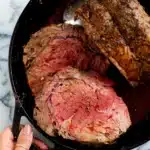
This Garlic Herb Prime Rib Roast is a succulent and flavorful centerpiece perfect for a special dinner. Infused with a mixture of fresh herbs, minced garlic, and melted butter, the standing rib roast is oven-roasted to juicy perfection, delivering a tender and aromatic meal that will impress your guests.
- Prep Time: 15 minutes
- Cook Time: Approximately 2 hours
- Total Time: 2 hours 35 minutes
- Yield: 8 servings
- Category: Dinner
- Method: Roasting
- Cuisine: American
Ingredients
Roast
- 6 lb standing rib roast
Herb Butter Mixture
- 4 tablespoons melted butter
- 6–8 garlic cloves, minced
- 1 tablespoon chopped fresh oregano
- 1 tablespoon chopped fresh parsley
- 2 teaspoons chopped fresh thyme
- 2 teaspoons chopped fresh rosemary
- 1 tablespoon kosher salt
- ½ tablespoon black pepper
Instructions
- Preheat Oven and Prepare Roast: Heat your oven to 450°F. Pat the rib roast dry with paper towels to ensure a crispy crust. Place the roast bone-side down in a roasting pan to keep it stable during cooking.
- Make Herb Butter Mixture: In a small bowl, combine the melted butter, minced garlic, chopped fresh oregano, parsley, thyme, rosemary, kosher salt, and black pepper. Stir well until evenly mixed.
- Apply Herb Rub: Thoroughly rub the herb butter mixture over the entire surface of the rib roast, ensuring an even coating for maximum flavor infusion.
- Initial High-Temperature Roast: Roast the beef in the preheated oven at 450°F for 30 minutes. This step sears the exterior and locks in the juices.
- Reduce Temperature and Continue Roasting: Lower the oven temperature to 375°F and continue roasting. Use a meat thermometer to check the center temperature periodically; roasting time will vary, estimated around 1 to 1½ hours depending on the roast’s shape and desired doneness.
- Check for Desired Doneness: Aim for an internal temperature of 145°F for medium-rare. Insert the thermometer into the thickest part of the roast to verify this temperature.
- Rest the Roast: Remove the roast from the oven and let it rest on a cutting board for 20 minutes. This resting period allows juices to redistribute, resulting in a more tender and flavorful meat when carved.
Notes
- Always rely on internal temperature rather than cooking time alone to ensure desired doneness and food safety.
- Use a digital meat thermometer for accurate temperature readings.
- Resting the roast after cooking is critical for juicy results.
- Adjust herb quantities to suit your taste preferences.
Find it online: https://cookedbysarah.com/garlic-herb-prime-rib-roast-recipe/